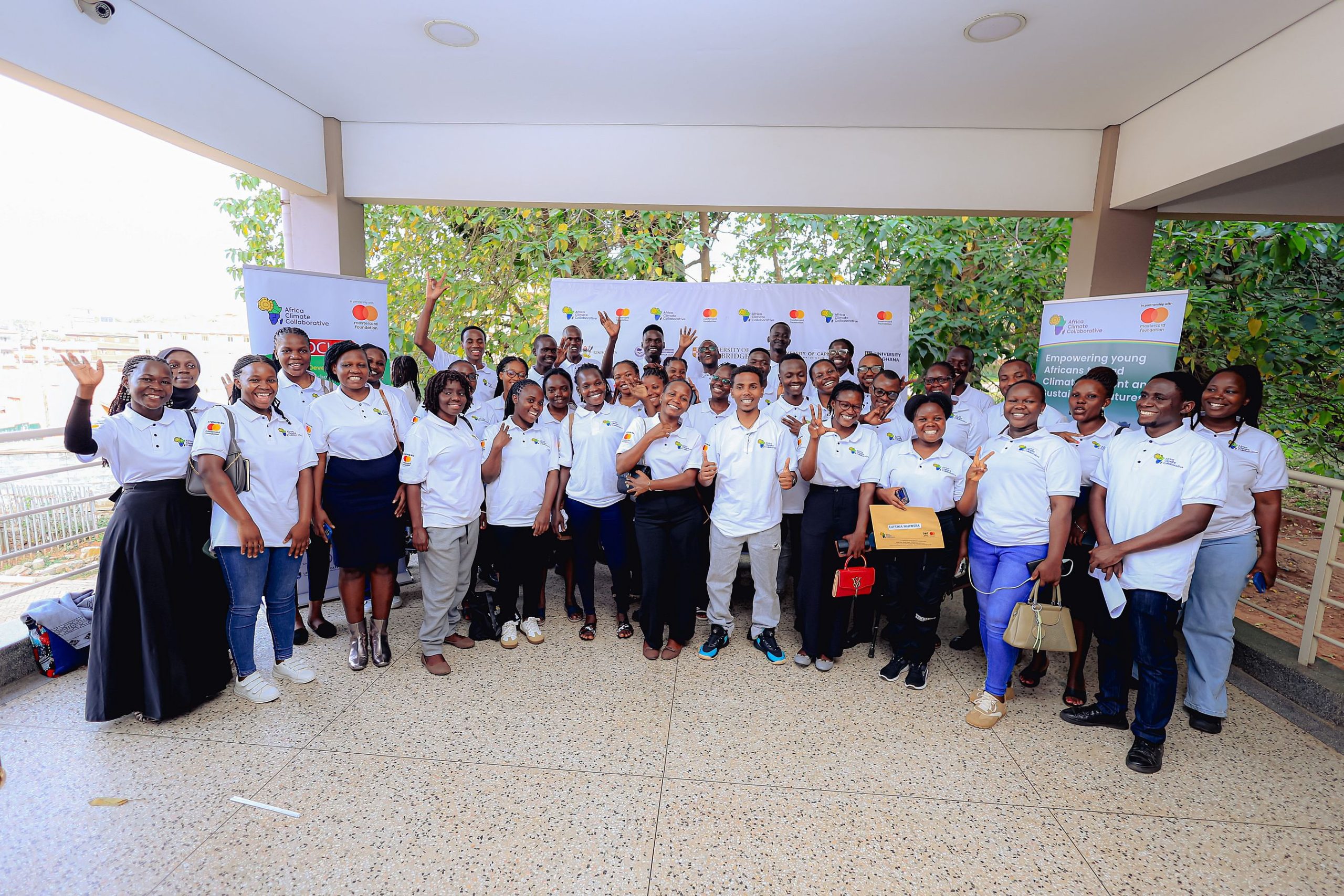
On 20th August 2026, the Africa Climate Collaborative at Makerere University awarded 50 Scholarships to students pursing various Master’s degree programmes for the 2026/2027 academic year.
The Africa Climate Collaborative is one of the initiatives supported by Mastercard Foundation at Makerere University. The initiative seeks to promote climate-positive growth in Africa by strengthening higher education institutions to equip young Africans with relevant knowledge, practical skills, and resources to effectively respond to climate change. It also aims to equip young Africans to contribute to climate resilience, innovation, entrepreneurship, and inclusive green economic growth.
The 50 students referred to as Scholars received their scholarship award letters during a colourful ceremony presided over by the Vice Chancellor of Makerere University, Prof. Barnabas Nawangwe, who was represented by the Dean of the School of Economics, Prof. Ibrahim Mike Okumu.
Prof. Okumu noted that scholarships provide academically talented young people with opportunities to pursue their education regardless of their background or circumstances. He encouraged the scholars to view the scholarship not only as an award but also as a responsibility to lead, innovate, and serve their communities.
“Now that you have stepped into the gates of Makerere University, remember that a scholarship is both an award and a responsibility. You have been chosen because we believe in your potential to lead, innovate, and serve. Makerere University offers you world-class academic resources, mentorship, and networks, but the impact you make with this opportunity will depend on your commitment, vision, discipline and level of integrity” Prof. Okumu said.
The Country Director, Uganda & Senior Director, Mastercard Foundation Scholars Program, Mr. Adrian Bukenya urged the scholars to look beyond their academic qualifications and use the opportunity to become transformative leaders in their communities and across Africa.
He encouraged the scholars to make the most of their time at Makerere University by building meaningful relationships with fellow students, faculty and other members of the university community.
Mr. Bukenya informed the audience that the Collaborative is a Youth Leadership Initiative with a strong academic component. He explained that transformative leadership involves becoming a change-maker capable of improving conditions for oneself, one’s family and community.
He also emphasised the importance of applying knowledge to address real-world challenges, noting that education provides young people with greater opportunities to contribute to economic and social development.
“Education is not just about earning a qualification; it is about becoming a transformative leader who uses knowledge, skills and opportunities to solve problems, create change and improve the lives of others. As scholars, you are not here simply to receive support, you are here to take responsibility for your success, make the most of this opportunity and give back to your communities. Once a scholar, always a scholar,” Mr. Bukenya said.
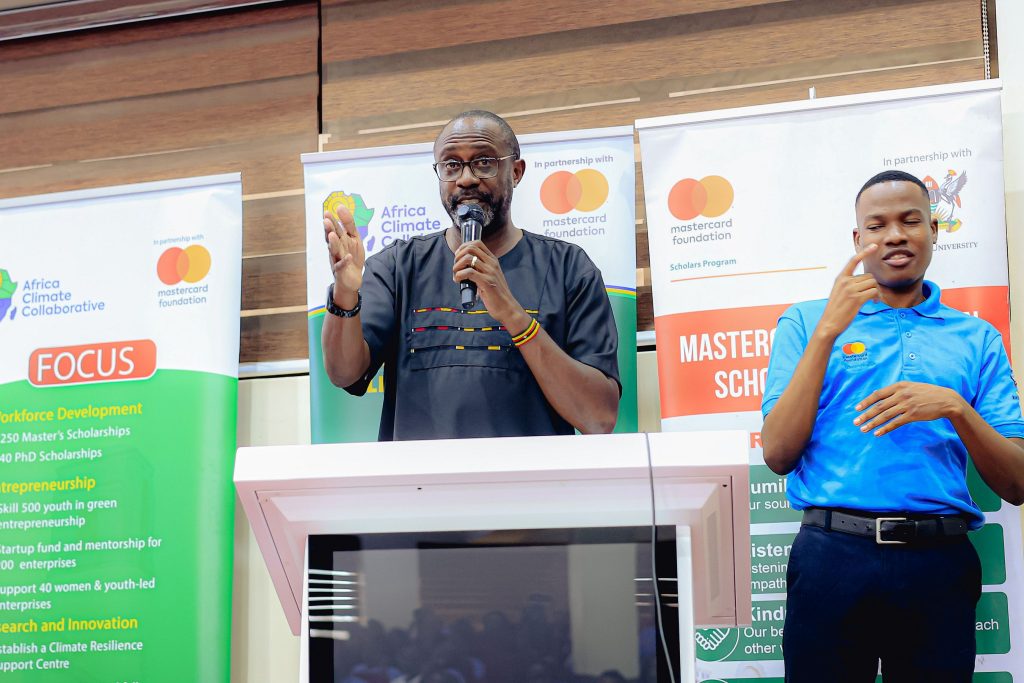
Mr Adrian Bukenya, Country Director, Mastercard Foundation addressing the 2026 scholars
The Process of Selecting the 50 scholars.
The Chairperson of the Selection Committee, Assoc. Prof. Claire Mark Mugasa highlighted the competitive process of identifying the successful candidates. She indicated that the Program received 483 applications, 38% from Females and 62% from male applicant, while 64 were international applicants. Using a shortlist ratio of 1:3, 150 applicants were shortlisted for interviews and later, 100 applicants considered for status validation before the final 50 scholars were selected.
Given the Program’s commitment to inclusion, diversity and equitable access to higher education, the Cohort of 50 Successful applicants includes Students with disabilities, students with refugee status, international students and other Ugandan nationals. Prof. Claire Mack Mugasa noted that the Committee approached the selection process with the fairness and transparency that it deserved.
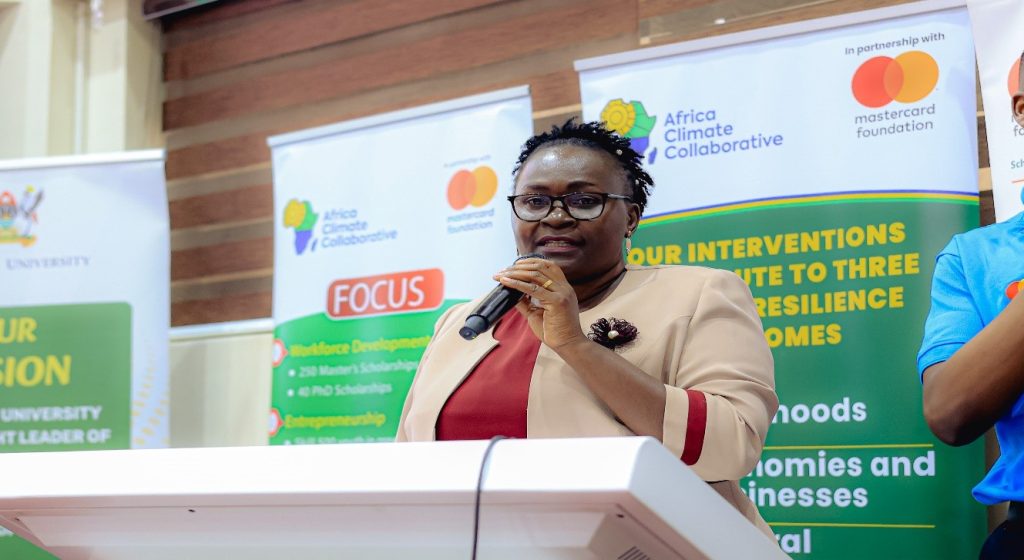
Prof Claire Mack Mugasa, the Chairperson of the Africa Climate Collaborative Selection Sub-Committee speaking at the event.
-
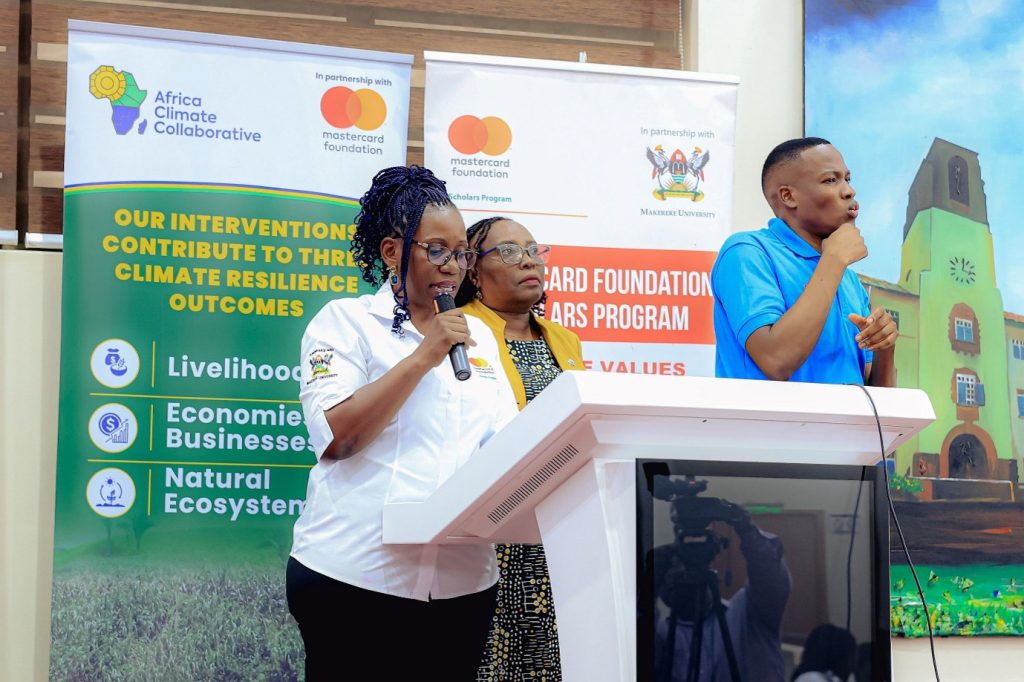
- Prof Justine Namaalwa, the Coordinator of Mastercard Foundation Initiatives at Makerere University speaking at the event.
-
- Mr Adrian Bukenya,Country Dircetor,Mastercard Foundation addressing the 2026 scholars
-
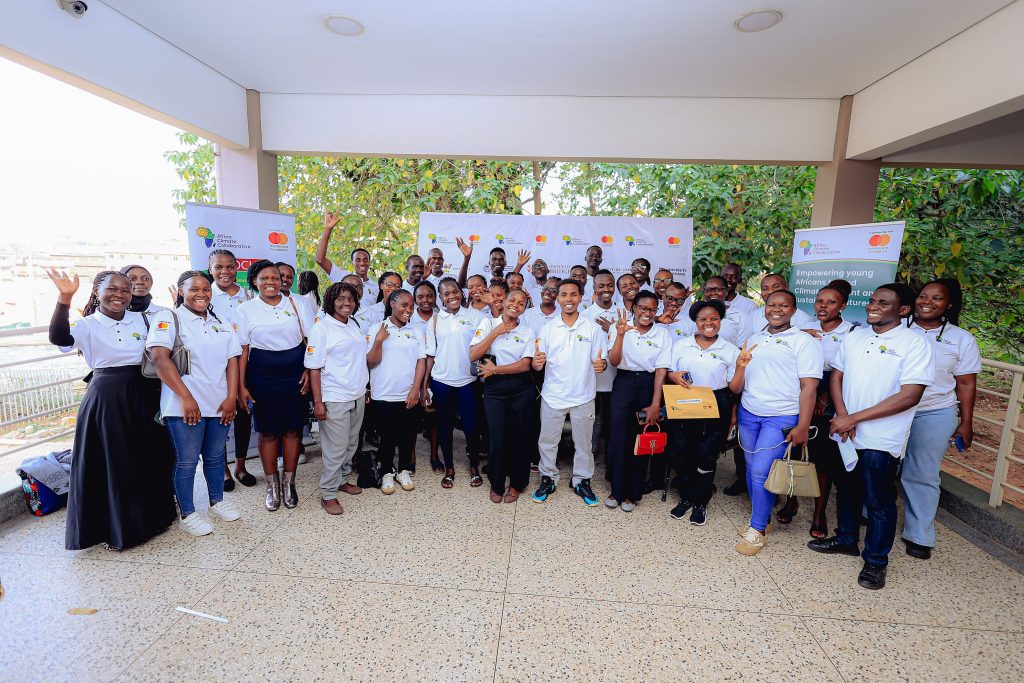
- Cohort two of the Africa climate Collaborative scholars pose for a group photo after the scholarship award ceremony held on 20th August 2026
-
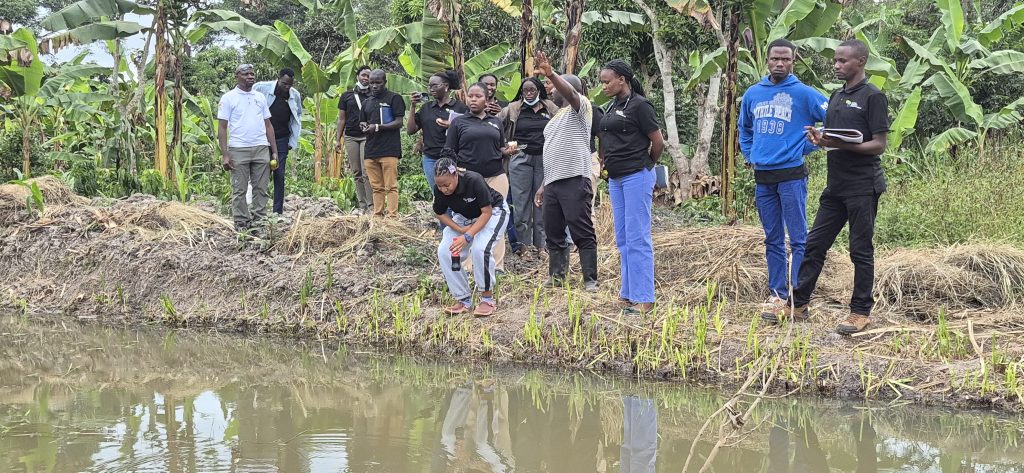
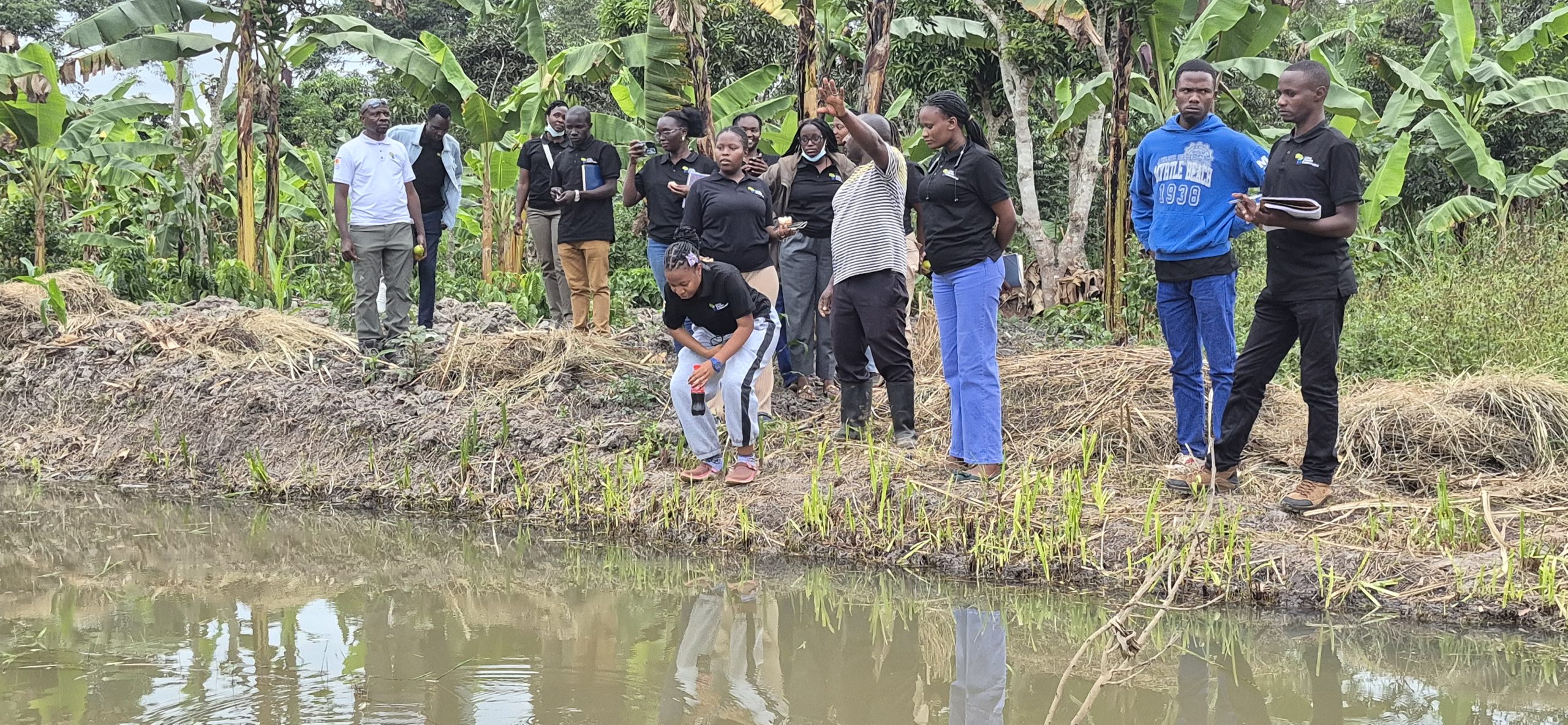
- Cohort one Scholars of Africa Climate Collaborative at Makerere University at a reconnaissance visit ahead of their research
-
- Prof Claire Mack Mugasa, the Chairperson of the Africa Climate Collaborative Selection Sub-Committee speaking at the event.
-
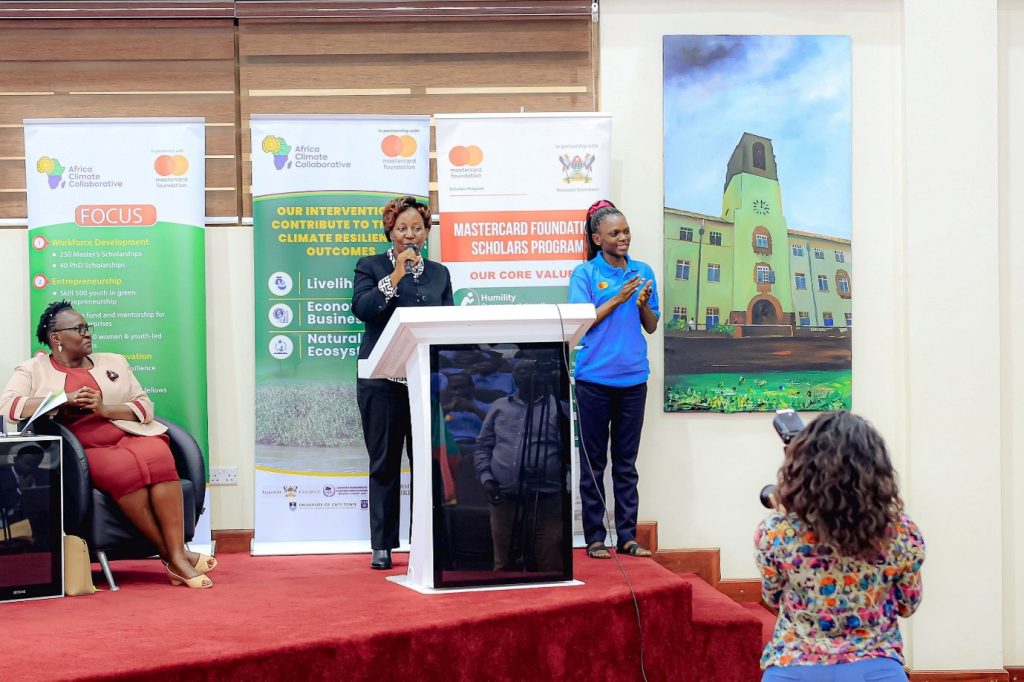
- Prof Gorettie Nabanoga, the Program Director speaking at the event.
The students will pursue different Master’s degree programmes, including; Master of Arts in Economic Policy and Planning, Master of Science in Livestock Development and Management, Master of Science in Agricultural Engineering, Master of Science in Crop Science, Master of Science in Global Biosecurity and Infectious Disease Management, Master of Science in Renewable Energy, Master of Science in Environment and Natural Resources Management, and Master of Science in Soil Science and Agrology.
The 2nd Cohort of Scholars brings the total number of Master’s Scholars supported by the Africa Climate Collaborative at Makerere University to 79, out of the 250 Master’s scholarships planned over the eight-year implementation period. The Program will also award 40 PhD Scholarships over the implementation period.
The Africa Climate Collaborative Program Director, Prof. Gorettie Nabanoga, whose remarks were presented by Dr. Patrick Byakagaba, Lead of the Climate Resilience Support Centre stressed that the scholarships represent a strategic investment in Africa’s human capital at a time when communities across the continent are increasingly experiencing the effects of climate change.
Prof Gorettie Nabanoga, the Program Director speaking at the event.
“Climate change is no longer a distant challenge. Communities are already experiencing changing rainfall patterns, prolonged droughts, floods, declining agricultural productivity, environmental degradation, and other challenges affecting livelihoods, economies, and ecosystems,” Dr. Byakagaba said.
He encouraged the scholars to undertake research and innovations that shall generate solutions that can contribute to a more resilient and sustainable Africa.
Africa Climate Collaborative Scholar speaks out.
Kalende Mercy, a Master’s student pursuing M.Sc. in Agricultural Engineering described the scholarship as an opportunity to turn her passion for solving farmers’ challenges into practical climate solutions.
Mercy said her experience working with farming communities exposed her to the realities faced by farmers whose livelihoods depend on rainfed Agriculture. Among the most pressing challenges she encountered was limited access to reliable water for agricultural production. These experiences strengthened her determination to pursue advanced training that would enable her to design practical solutions to climate and agricultural challenges.
For Mercy, the scholarship represents much more than an opportunity to earn a postgraduate degree. She sees it as a pathway to acquiring the knowledge, research capacity and technical expertise needed to return to the communities she has worked with and contribute to meaningful climate adaptation solutions for farmers.
“For me, this Master’s degree in Agricultural Engineering is about returning to the communities I have lived in, better equipped than before. It is about meeting a farmer who needs water and offering more than sympathy: research, design and engineered solutions that help families grow food and withstand a changing climate.” Ms. Kalende said.
ABOUT AFRICA CLIMATE COLLABORATIVE PROGRAM
Africa Climate Collaborative at Makerere University, a Program supported by Mastercard Foundation, is an eight-year (2025–2033) Initiative aimed at empowering Africa’s youth, through transformative education, innovative research, and strategic partnerships that advance climate resilience, sustainability, and inclusive green economic growth.
The Collaborative is implemented through a consortium of universities, including Makerere University, University of Cambridge, University of Cape Town and University of Ghana. The efforts of the partner Universities are coordinated by the Association of African Universities (AAU), the backbone organisation for the collaborative.
The Program is operationalised under four mutually reinforcing pillars:
- Pillar 1: Workforce Development: Enable talented young professionals to lead the development of climate solutions through quality education
- Pillar 2: Entrepreneurship: Empower youth to drive green economies through enhanced green entrepreneurship skilling program
- Pillar 3: Research and Innovation: Catalyse high-quality research and innovation through a Climate Resilience Support Centre
- Pillar 4: Networks, Policy, and Learning: Strengthen networks to disseminate research outputs and innovations to enhance resilience to climate change
The writer is Damali Mukhaye, Communications, Public Relations and Branding Officer of the Africa Climate Collaborative at Makerere University.

0 Comments