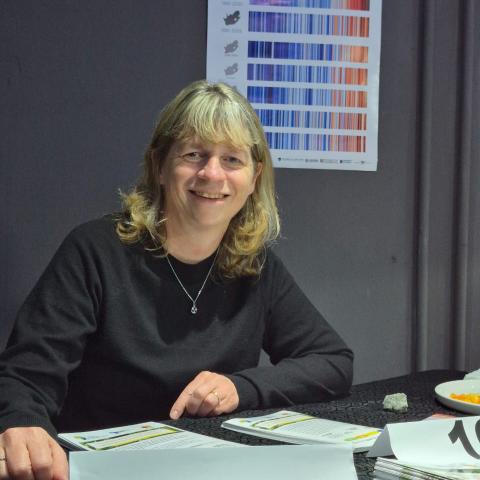
During June and July 2026, Dr. Debbie Sparks from the Africa Climate Collaborative at the University of Cape Town (UCT), took part in two Habitable Planet Workshops (HPW), a hands-on training event run by the Alliance for Collaboration on Climate and Earth Systems Science (ACCESS), a government-funded climate change research and education programme hosted at the Council for Scientific and Industrial Research (CSIR). In her role she contributed to providing career guidance and mentorship to some of South Africa’s most promising young earth systems science students.
Since 2007, ACCESS has run the Habitable Planet Workshop (HPW) Programme, a series of interventions that aim to help young South Africans, particularly students from South Africa’s Historically Disadvantaged Universities, access national science research opportunities. Every year, around 40-50 undergraduate and early postgraduate students are selected to attend one of three workshops. Two of the workshops are 10-day-long on-site training workshops that happen during the winter break, and a third hybrid workshop happens over the second half of the year, with 40-50 students being selected to attend the physical workshop component during the summer vacation. These workshops are focused on climate science learning opportunities through a distinctly Southern African lens.
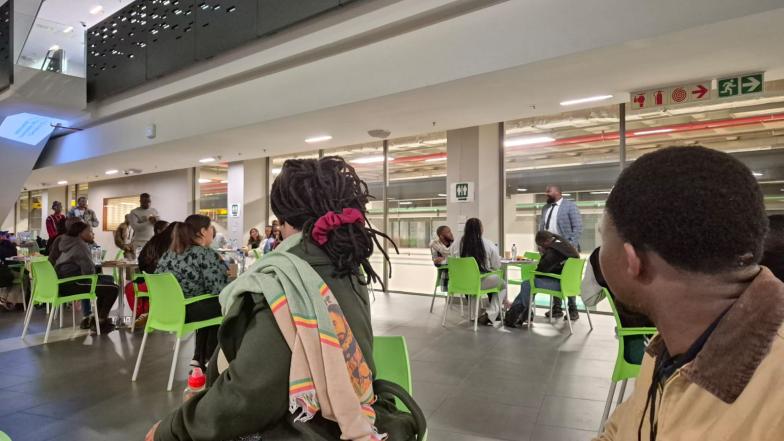
Students, postgrads and facilitators gathered at the HPW 49 Careers Cafe at the University of Cape Town (Source: Dr. Sparks)
Africa Climate Collaborative – ACCESS Partnership and Impact
This year, the Africa Climate Collaborative’s involvement introduces a new partnership between the African Climate and Development Initiative (ACDI), which hosts the Africa Climate Collaborative at the University of Cape Town (UCT) and ACCESS, focusing on higher education resilience and sustainability in Africa. The Collaborative prioritises hosting climate outreach events like the HPW, which focuses on introducing climate-related studies, employment pathways and regional postgraduate programmes to students who are interested. Dr. Sparks explains what ACDI, through the Africa Climate Collaborative platform, aims to achieve with HPW:
“We plan to use the experience and skills of the ACDI staff to enhance the experience of the Habitable Planet students at 3 workshops and through leadership training. In addition, ACDI will support additional young people to allow them to access HPW programmes.”
She elaborates further:
“This partnership will allow ACDI to make a meaningful difference to more than 170 students each year. We will contribute to the HPW programme by enhancing the teaching on one day of the Habitable Planet workshops, as well as the leadership training.”
Reflections from the most recent HPWs (HPW 48 AND HPW 49)
During two careers cafés, one at HPW 48 and HPW 49, senior undergraduates and early post-graduate students had the opportunity to engage with Dr. Sparks on possible careers pathways in the field of climate change. These HPW workshops were hosted by the University of Zululand in Richard’s Bay (HPW 48) and the University of Cape Town (HPW 49).
At the workshops she provided a lecture and ran a practical session on CV building. She continues to offer her time reviewing CVs and job applications for the HPW students who attended. She explains how the events facilitated relationship building and the impact on the students and herself:
“The workshop was engaging and inspiring for the students, and the connections I personally built with students were very rewarding. It is an amazing 10-day event for students that offers practical, hands-on and interactive experiences. Participants learn so much in the process, gaining valuable career mentoring, networking opportunities, and essential soft skills.”
Dr. Sparks shared with us that the ACCESS-HPW events not only benefit participants by building practical science skills, connections, and inspiring long-term careers in earth systems science, they also provide a crucial link to the Africa Climate Collaborative postgraduate programmes hosted at ACDI.
“I especially focused on inspiring students to consider careers in climate change, and encouraged them to apply for the Masters scholarships, and of course our Masters programme through the Africa Climate Collaborative at UCT, as well as PhD fellowships at UCT.”
This partnership between the Africa Climate Collaborative at UCT and ACCESS reflects a broader commitment from both entities and all the university partners to building the next generation of African climate and earth systems researchers.
These engagements form an integral part of the strategic focus of the Africa Climate Collaborative at UCT, which aims to empower Africa youth through accessible climate education, innovative research pathways and focused partnerships that will advance sustainability, inclusive growth and climate resilience.


0 Comments