

“Africa does not lack ideas. What we lack are systems that help those ideas grow.”
That underlying truth echoed throughout the Delta40 site visit during the Africa Climate Collaborative 2026 Convening, an experience that moved beyond discussion into a deeper understanding of what it truly takes to build and scale climate ventures across the continent.
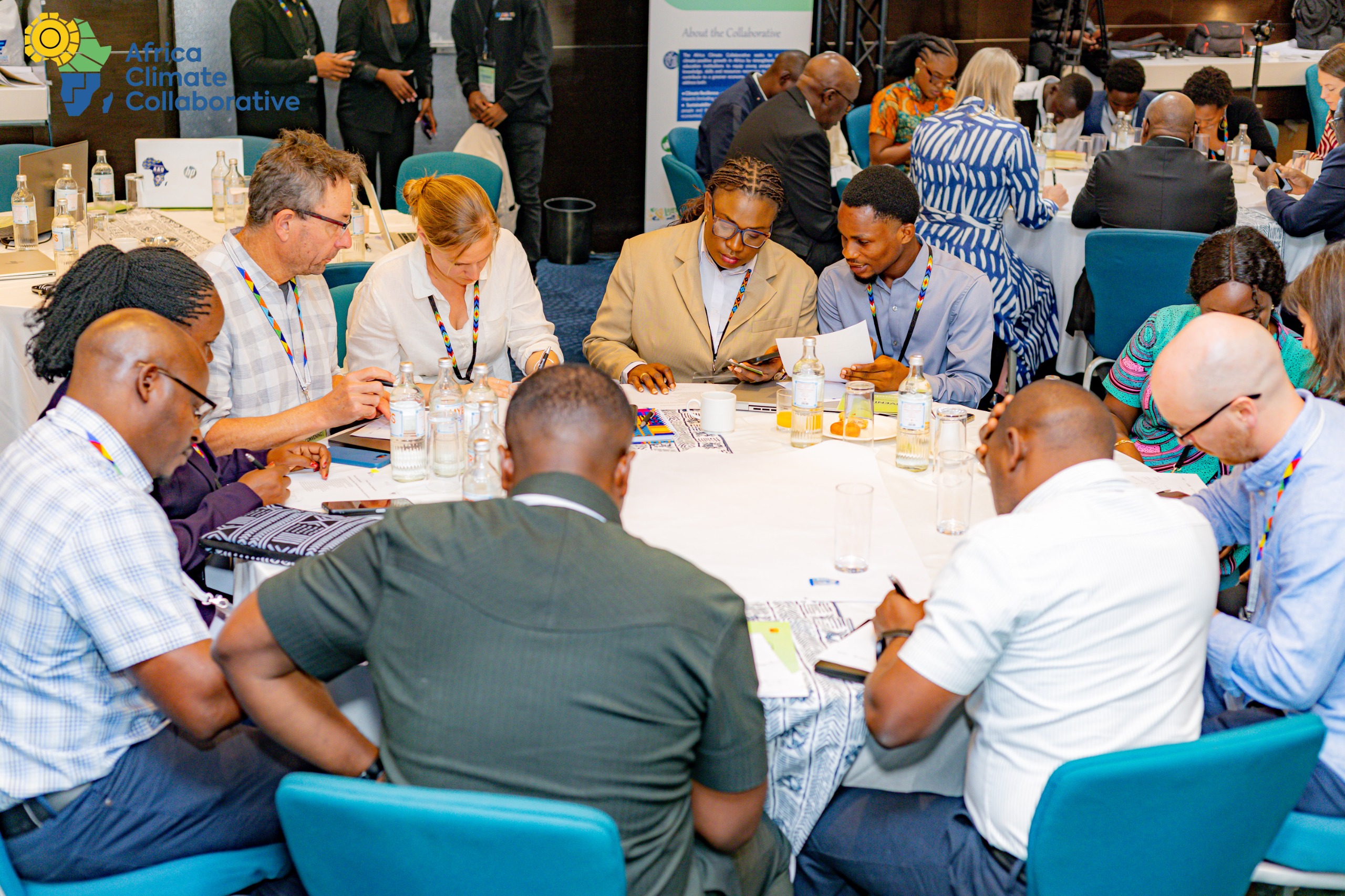
Set against the broader theme “From Ambition to Action: Scaling African Youth-Led Climate Solutions,” the session brought participants into direct engagement with founders, operators, and innovators navigating the realities of climate entrepreneurship in Africa. What emerged from these interactions was not just insight, but clarity: the challenge is no longer innovation; it is execution.
At the centre of the discussion was the persistent challenge known as the “valley of death.” This is the stage where promising climate innovations stall—not because they lack potential, but because they lack the systems required to support growth. Founders consistently highlighted that the issue is rarely about technology itself. Instead, it is shaped by broader structural constraints, including limited infrastructure, inadequate financing, and the absence of long-term operational support.
This reality is particularly pronounced for ventures operating in hardware, clean energy, and supply chain systems. In these sectors, entrepreneurs must navigate weak manufacturing ecosystems, fragmented markets, and financing models that are often misaligned with their business needs. As a result, even the most promising solutions struggle to transition from prototype to scale.
One of the most striking sentiments shared during the session was that many founders feel “over-mentored and under-capitalised.” This captures a growing frustration within the ecosystem. Entrepreneurs are frequently exposed to repeated training programmes and pitch competitions yet lack access to the practical support required to build and sustain their ventures. The issue, therefore, is not a lack of knowledge, but a lack of targeted, needs-based support. What founders require is technical expertise, commercial strategy, and access to patient capital that reflects the realities of their operating environments.
It is within this context that Delta40’s model becomes particularly relevant. Rather than offering short-term acceleration, the venture studio provides embedded, long-term support to its portfolio companies. By integrating expertise in finance, operations, and commercialisation over an extended period, Delta40 enables ventures to address complex challenges progressively. This approach fosters trust, strengthens capacity, and moves beyond transactional engagement toward sustained partnership. The experience of ventures such as Farm to Feed demonstrates the value of this model, showing how continuous, hands-on support can enable companies to navigate layered challenges and achieve meaningful growth.
The session also brought into sharp focus the disconnect between university research and commercialisation in Africa. While there is no shortage of talent within academic institutions, many researchers are unable to translate their innovations into viable enterprises. This is not due to a lack of ideas, but rather the absence of enabling structures. Financial pressures, limited safety nets, and weak collaboration between academia and industry create barriers that prevent researchers from fully engaging in entrepreneurship. As noted during the discussion, the challenge lies not in capability, but in the systems that support or fail to support the transition from research to enterprise.
A more effective approach, as highlighted in the session, involves creating pathways that allow researchers to remain within academia while engaging in commercialisation. This includes pairing them with experienced entrepreneurs and establishing shared ownership models that balance academic and business interests. Such structures not only enable innovation to reach the market but also strengthen the overall ecosystem.
Youth leadership emerged as a defining feature of the Delta40 engagement. Across the ventures presented, young innovators are already driving solutions in areas such as clean energy, food systems, and climate adaptation. However, participation alone does not eliminate the barriers they face. Many young founders, particularly those working in capital-intensive sectors, struggle with access to financing, infrastructure, and stable support systems. These constraints highlight the need for more inclusive and sustained investment in youth-led innovation.
Despite these challenges, the session also demonstrated that effective solutions already exist. Models such as embedded venture associates, needs-based innovation grants, and university-linked incubators are beginning to address the structural gaps within the ecosystem. What distinguishes these approaches is their alignment with the actual needs of entrepreneurs. Rather than relying on generic training or competitive funding models, they prioritise practical support, long-term engagement, and context-specific solutions.
Partnerships were identified as a critical enabler of scale. Existing collaborations, including Delta40’s work with the University of Cambridge to support climate ventures, illustrate the potential of coordinated, cross-institutional approaches. There is now a clear opportunity to expand such partnerships across African universities, creating integrated pipelines that connect research, venture development, and scaling. Institutions such as the Association of African Universities have a vital role to play in facilitating these connections and advocating for policies that support innovation.
Ultimately, the Delta40 session reinforced a broader shift in thinking. Africa does not lack ambition, ideas, or talent. What is required is a deliberate focus on building systems that enable execution. This includes long-term support models, financial safety nets, and stronger linkages between academia and industry.
One of the most promising proposals emerging from the session is the embedded associate model, which involves placing trained professionals within startups for extended periods. This approach offers a practical and scalable way to support both venture growth and talent development, while strengthening the broader innovation ecosystem.
The Delta40 engagement provided a clear and compelling message: the future of climate innovation in Africa will not be determined by the ideas we generate, but by the systems we build to support them.

0 Comments